
A measurement is useful when it helps us understand or improve a life. Today’s articles examine biological clocks, everyday movement, dementia risk and sleep—and ask how closely each finding connects to outcomes people can feel. Mechanisms, associations and treatment results are kept distinct.
In this edition
- Review of 26 Trials Finds Epigenetic Clocks Not Yet Valid Surrogate Endpoints
- Fasting Plus Mediterranean Diet Lowered Inflammation; Diet Alone Did Not
- Probiotics Increased Bowel Movements in Parkinson's, but Not Movement Scores, Review Finds
- Becoming Active After 50 Linked to Less Disability Across Five Cohorts
- Ear-Clip Nerve Stimulation Did Not Lower Blood Pressure Overall, Small Trial Finds
- Extra Schooling Cut Dementia Incidence and Blunted Genetic Risk, Study Finds
- Everyday Walking Cadence From Wearables Predicted Mortality as Well as Gait-Speed Tests
- Cochrane Review Finds Too Little Evidence That Medical Cannabis Helps Insomnia
- Non-Hormonal Hot Flash Drugs Linked to Better Sleep Scores in Menopause, Meta-Analysis Reports
- Older Adults With Chronic Conditions Still Gained From a Year of Training
01 · Review of 26 Trials Finds Epigenetic Clocks Not Yet Valid Surrogate Endpoints
A lower "biological age" on an epigenetic clock does not reliably mean a person's health got better, according to a new systematic review of studies in people.

The review, published in Experimental Gerontology in 2026, is a systematic review. It pools no new participants. Instead, the authors searched for existing human studies of anti-aging interventions and compared what happened to epigenetic clocks with what happened to clinical outcomes. They included 26 independent studies: 13 comparative studies and 13 single-arm before-and-after studies. The abstract does not give the total number of participants.
Epigenetic clocks estimate biological age from chemical tags on DNA, called DNA methylation. Some companies and researchers report a clock score as a sign that aging has slowed or reversed. The question here was simple: when a clock changes after an intervention, do real health measures change with it?
Mostly, the answer was inconsistent. The authors classified each study by comparing its clock result with its clinical result. Fifteen studies were mixed. Six were indeterminate and four were jointly inconclusive. Only one study was uniformly concordant for intermediate outcomes, and it was an uncontrolled study. No comparative study was uniformly concordant. No study of patient-important outcomes was uniformly concordant either. Eleven studies went further. They looked at whether individual people's clock changes matched their own clinical changes, whether responders differed from non-responders, or whether the clock explained an intervention's effect. According to the authors, clear findings were isolated and were not replicated across independent studies.
The evidence was too varied to combine. No pairing of intervention, clock and clinical outcome met the criteria for a meta-analysis. The review also found no trial-level validation of a clock as a surrogate endpoint, which is a stand-in measure that can replace a harder outcome such as disease. The authors rated the certainty of evidence as very low across all the bodies of evidence they assessed.
The authors say favorable signals were concentrated mainly in selected intermediate outcomes. They conclude that epigenetic clocks should currently be considered exploratory or adjunctive biomarkers of intervention response, not validated clinical surrogate endpoints.
For the public, the practical meaning is about how to read claims. A change in a clock score, on its own, is not shown by this review to reflect a change in health. The review does not say clocks are useless, and it does not test any single product or program. Its abstract does not say why the results were inconsistent, so that remains open.
The finding fits with earlier coverage in The Arising. On October 20, we reported on a different systematic review that found no consistent epigenetic age reversal from antioxidant supplements. This review is a separate study, but it adds a related caution: the clock score is the thing being measured, and what it means for health is still unproven.
Trials that measure clocks and clinical outcomes together, with controls, and tests of whether clock changes explain health benefits. Readers should not start or stop any supplement, treatment or program without talking to their own clinician.
Sources: Experimental gerontology (2026), Experimental Gerontology
Read the cited source: Source 1
Open this article → · Biological-age clocks · Reading the evidence
02 · Fasting Plus Mediterranean Diet Lowered Inflammation; Diet Alone Did Not
A Mediterranean diet is often praised for calming inflammation, but a new randomized trial found that eating this way for eight weeks did not lower a key inflammation marker. Adding twice-weekly fasting days did.

The study, published in Cell Metabolism in 2026, was a randomized controlled-feeding trial. That means researchers provided the food and assigned people by chance to different groups. It included 53 adults with metabolic risk factors. Of these, 77% were women, and the average age was 54.7 years.
Researchers asked a question that is often left unclear: does the anti-inflammatory effect of a Mediterranean diet come from the quality of the food, or from the weight loss that often goes with it?
The trial ran for 16 weeks. For the first 8 weeks, one group received a fully provided Mediterranean diet. The comparison group kept eating its usual western diet. For the next 8 weeks, both groups added two fasting days per week. The abstract does not describe the fasting days in more detail.
The main outcome was high-sensitivity C-reactive protein, or CRP. It is a blood marker of inflammation. During the diet-only phase, CRP did not change, even though the two groups clearly ate differently.
After fasting began, CRP fell in the Mediterranean-diet group compared with controls. This came with greater weight loss, better insulin sensitivity and lower blood pressure. Insulin sensitivity describes how well the body responds to the hormone that controls blood sugar.
Not every benefit waited for fasting. According to the abstract, improvements in blood lipids, meaning blood fats such as cholesterol, had already appeared in the diet-only phase.
The team also ran multi-omic analyses, which measure many molecules at once. These showed matching reductions in inflammatory signaling. The makeup of the gut microbiome stayed largely stable.
The authors conclude that diet quality alone does not lower inflammation over 8 weeks. They say that negative energy balance, meaning taking in fewer calories than the body uses, and the weight loss it brings appear to be the stronger drivers.
The wording matters. The authors say "appear," and the design has limits. The sample was small. The study ran for a short time. Only the abstract was available to us, so details such as how much weight people lost or how large the CRP change was are not reported here. The results also do not show that a Mediterranean diet has no long-term value for inflammation or for other aspects of health.
Longer trials that separate the effect of weight loss from the effect of fasting itself, and that test whether the CRP drop lasts. Readers should not start or stop any diet or fasting routine without talking to their own clinician.
Sources: Cell metabolism (2026), Cell Metabolism
Read the cited source: Source 1
03 · Probiotics Increased Bowel Movements in Parkinson's, but Not Movement Scores, Review Finds
Gut-targeted treatments for Parkinson's disease have drawn attention for years, but a new pooled analysis suggests their clearest benefit so far is in the bowel, not in the shaking, stiffness and slowness that define the disease.
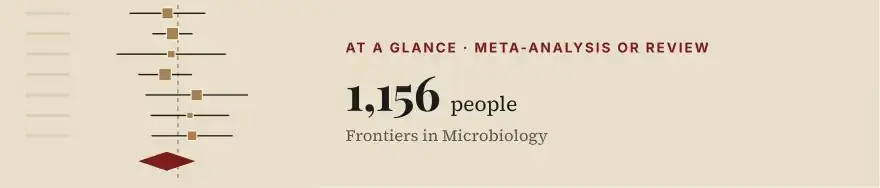
The work is a systematic review and network meta-analysis, published in Frontiers in Microbiology in 2026. It pulls together results from 19 randomized controlled trials, which involved 1,156 people with Parkinson's disease. Randomized trials are the strongest design for testing a treatment. A network meta-analysis lets researchers compare several treatments at once, even when the trials did not test them against each other.
The treatments were probiotics, synbiotics (probiotics combined with a food source for them) and fecal microbiota transplantation, or FMT, which transfers gut bacteria from a donor. They were compared with placebo and with routine care. Routine care meant staying on stable doses of standard Parkinson's drugs. The authors searched databases from their start through April 1, 2026.
Probiotics came out ahead on one measure. According to the paper, they increased the frequency of spontaneous bowel movements compared with placebo (mean difference 1.93, 95% confidence interval 0.23 to 3.64). Among trials that gave treatments by mouth, probiotics (mean difference 2.01) and synbiotics (mean difference 1.23) both increased bowel movement frequency. The authors rated the certainty of the oral probiotic result as moderate. Constipation matters in Parkinson's. The study's introduction notes that gut problems, particularly constipation, may appear before motor symptoms do.
Movement symptoms told a different story. No active treatment significantly improved scores on the MDS-UPDRS III, a clinician-rated measure of motor function, compared with placebo. Synbiotics and FMT ranked higher than the other options in the authors' ranking analysis. But the authors say those rankings should be considered exploratory. Evidence for motor function and quality of life was rated low to very low certainty.
That means these trials cannot show that the treatments help movement, and they cannot rule it out either. The authors call for larger head-to-head randomized trials.
The review also notes why results have been inconsistent. Trials differ in microbial strains, doses, delivery routes and treatment length. A separate 2025 review in Minerva Gastroenterology, summarized only through its abstract, points the same way. It reports that fewer butyrate-producing bacteria have been linked to Parkinson's progression, and that early microbiome-based treatments show preliminary benefit. It also stresses that varied methods and the difficulty of proving cause remain major limits.
Only the abstract and page text of the main study were available for this article. Details beyond them, such as safety reporting and individual trial designs, are not covered here.
Larger trials that compare probiotics, synbiotics and FMT directly, using consistent strains, doses and durations, and that measure motor symptoms and quality of life. Anyone considering a probiotic, synbiotic or FMT for Parkinson's should not start or stop any treatment without talking to their own clinician.
Sources: Frontiers in Microbiology (2026), Frontiers in Microbiology
Read the cited sources: Source 1 · Source 2
Open this article → · The microbiome · Brain health & cognition
04 · Becoming Active After 50 Linked to Less Disability Across Five Cohorts
Adults over 50 who became physically active were less likely to lose the ability to manage daily tasks, and more likely to regain independence after losing it, according to a new analysis in BMC Public Health.
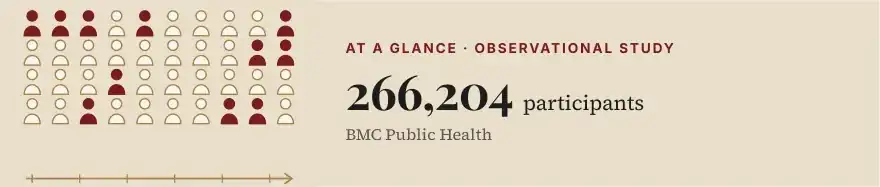
The evidence is observational. The researchers pooled data from five population-based aging cohorts. Of 266,204 participants who met the age criterion, 115,140 had usable paired data on physical activity and function, and 112,855 entered the main analysis. Observational work can show links. It cannot show that activity caused the differences.
The team sorted people into four groups by comparing two assessments, usually about two years apart. Some were stable inactive. Some became active. Some became inactive. Some stayed active. In the Mexican cohort, the median gap was three years. They also tracked function in three states. Independent meant no disability. The second state was disability in instrumental activities of daily living (IADL) only. These are more complex tasks of daily life. The third was disability in basic activities of daily living (BADL), which covers more fundamental self-care. Statistical models estimated how often people moved between these states, in either direction. Death was not modeled as an outcome.
Becoming active and staying active were generally linked to less decline and more recovery than staying inactive. Staying active had the most favorable overall profile, according to the authors.
Among people who started out inactive, those who became active had a lower rate of moving from Independent to IADL disability only (hazard ratio 0.58; 95% confidence interval 0.46–0.72). A hazard ratio below 1 means the transition happened less often. They also had a higher rate of recovering from BADL disability to Independent (hazard ratio 1.73; 95% CI 1.40–2.13).
Stopping activity showed the opposite pattern. Compared with people who stayed active, those who became inactive moved into IADL disability more often (hazard ratio 1.28; 95% CI 1.03–1.58). They recovered from BADL disability less often (hazard ratio 0.66; 95% CI 0.61–0.72).
The authors urge caution. Results varied widely between cohorts. The I² statistic, which measures inconsistency between studies, ranged from 26.1% to 98.5%. In 12 of 18 prediction intervals, the range of effects expected in a new setting included 1, meaning no effect. A sensitivity analysis using multiple imputation, a method for filling in missing data, pointed the same direction.
The abstract does not say why the patterns differ between cohorts. It does not report how much activity was needed or what type. Those details are unverified here, as only the abstract was available.
A separate study in GeroScience looked at 1,611 adults followed from age 80 to 90 in two US cohorts. It found that IADL disability strongly predicted later disability. It also found several small links between disability and physical activity, and between disability and depressive symptoms. The authors said this highlights the importance of maintaining functional independence in later life. That work is also observational and was only available as an abstract.
Together, the studies suggest that activity and independence track closely in older age. Neither can say whether starting to exercise at 50 or later produces the benefit. Trials that assign activity directly would be needed to test that. Anyone considering changes to their activity should first talk to their own clinician.
Sources: BMC Public Health (2026), BMC Public Health
Open this article → · Fitness & movement · Care & independence
05 · Ear-Clip Nerve Stimulation Did Not Lower Blood Pressure Overall, Small Trial Finds
A handheld device that sends mild electrical pulses to the ear did not lower blood pressure more than a sham device across a whole group of people with hard-to-control hypertension, according to a new randomised trial.

The study, called SCRATCH-HTN, was published in Hypertension in 2026. It was a double-blind, sham-controlled, phase 2a trial. That means neither the participants nor the researchers knew who had the real device, and an early-stage trial like this mainly checks safety and gives a first look at whether a treatment works. It enrolled 63 adults with uncontrolled hypertension who were already taking one or more blood pressure medicines.
Roughly 40% of people with hypertension do not reach recommended blood pressure targets despite medication, the authors write. Device-based options exist, but they are often expensive or invasive. The team tested a noninvasive approach called transcutaneous autonomic neuromodulation, or tAN. It uses a device to stimulate sensory fibres of the vagus nerve through the skin. The vagus nerve is part of the autonomic nervous system, which helps regulate heart rate and blood pressure without conscious control.
Participants had an average age of 47.2 years, and 71.4% were male. Their average daytime blood pressure was 150/95 mm Hg. They were randomly assigned 2:1 to active tAN or sham treatment. They gave themselves 30 minutes of treatment daily for 14 days, then 10 weekly sessions.
The main safety and acceptability goals were met. The authors conclude that tAN was safe and well tolerated.
The main efficacy question was whether daytime systolic blood pressure, the top number, changed from the start of the study to three months. It did not differ significantly between groups. The gap between active and sham was 2.35 mm Hg, with a 95% confidence interval from −4.37 to 9.07 (P=0.49). At one month the difference was −1.01 mm Hg (−6.87 to 4.85; P=0.73). Those intervals are wide and include both no effect and a modest effect in either direction. No significant differences appeared for other secondary measures, including heart rate and quality of life.
There was one signal in a pre-specified analysis. The researchers found a significant interaction between treatment and starting systolic pressure (P interaction 0.003). People whose baseline systolic pressure was above 160 mm Hg showed a greater response to active tAN. The abstract does not give the size of that response or the number of people in that group. With only 63 participants, subgroup findings can be chance results and need confirmation. The authors' own conclusion is measured. No significant blood pressure-lowering effect was demonstrated. A benefit in subgroups, or a modest effect in a larger group, cannot be excluded and warrants evaluation.
The press coverage went further in tone. ScienceDaily, relaying a Queen Mary University of London release, described the device as showing "early promise". It quoted chief investigator Dr. Ajay Gupta as saying the technology "could ultimately provide a cheap, scalable solution for millions" and that those with more severe hypertension showed "a clear blood pressure reduction" on the active device compared with sham. Those are the investigators' views. The published abstract supports safety, and it supports a hypothesis about higher-pressure patients. It does not show that the device lowers blood pressure.
Larger trials designed to test whether people with very high starting blood pressure truly respond to tAN. Anyone considering starting, changing or stopping any blood pressure treatment, including a device, should talk to their own clinician first.
Sources: Hypertension (Dallas, Tex. : 1979) (2026), ScienceDaily (Queen Mary University of London;
Open this article → · Cardiovascular health · Wearables & health signals
06 · Extra Schooling Cut Dementia Incidence and Blunted Genetic Risk, Study Finds
A change in school-leaving law decades ago appears to have altered who developed dementia later in life, and it may have softened the effect of risky genes too.
That is the finding of a study in the Proceedings of the National Academy of Sciences by Barcellos, Carvalho, Langa, Nimmagadda and Turley. It is an observational study in people. It uses a quasi-experimental design rather than a randomised trial. The abstract available to us does not give the number of participants, so we cannot report it.
The researchers wanted causal evidence. According to the paper, there is little of it on what protects people against Alzheimer's disease and related dementias. Most earlier work simply notes that more educated people have less dementia. That could reflect other differences between people, such as income or health habits.
To get around this, the team used a compulsory schooling reform. A reform that raises the required years of school creates a sharp cutoff. People just on one side of it had to stay in school longer. People just on the other side did not. The two groups are otherwise similar, so the comparison works somewhat like an experiment. The method is called a regression discontinuity.
Dementia cases were identified from medical history, hospital records and death registries. The authors say this addressed concerns about selective sample attrition. That is the worry that people who drop out of a study over time are not typical, which can distort results.
The main result: according to the study, education reduces the incidence of Alzheimer's disease and related dementias. Incidence means the rate of new cases.
The second result concerns genes. Using molecular genetic data, the authors show that the reform weakened the relationship between genetics and dementia incidence. In other words, genetic risk mattered less for people affected by the reform. The authors conclude that genetic risk of dementia is not immutable and can be modified by social policy. Some limits follow from the design. The reform affected a specific group of people in a specific place and time, and the abstract gives few details. Results may not carry over to other populations or to today's schooling. We have only the abstract, so effect sizes and the size of the genetic change are not reported here.
Full-text details on effect sizes and sample, and whether similar results appear in other countries and reforms, and whether later-life learning shows any comparable effect.
Sources: Proceedings of the National Academy of Sciences of the United States of America (2026),
Open this article → · Brain health & cognition · Genomics · The economics of longer lives
07 · Everyday Walking Cadence From Wearables Predicted Mortality as Well as Gait-Speed Tests
How fast a person walks through an ordinary day may say as much about their long-term survival as a timed walk in a clinic.
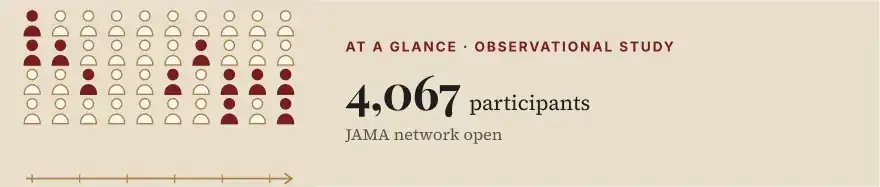
That is the finding of a study in JAMA Network Open. It is an observational cohort study, so it shows links, not cause and effect. The researchers drew on the Whitehall II accelerometer substudy in the UK and analysed 4,067 participants. Their mean age was 69.3 years, and 3,024 of them (74.4%) were male.
Clinics often measure walking speed with a short test. Here, it was a 2.44-metre walk, recorded in meters per second. The team compared it with walking cadence, which is steps per minute. Cadence came from 9 days of data from a wrist-worn accelerometer, a motion sensor, as people went about daily life.
Two cadence measures were used: the median cadence and the 95th percentile cadence. The median is the typical pace. The 95th percentile reflects the faster end of a person's walking.
Baseline measures were taken between January 2012 and December 2013. Deaths were tracked through a British national mortality register until August 19, 2024. The median follow-up was 11.8 years.
All three measures were linked to lower risk of death from any cause. The figures are per 1 standard deviation higher, a standard step up in each measure. These results came from models that accounted for sociodemographic, behavioral and health-related risk factors. For clinical walking speed, the hazard ratio was 0.77 (95% CI, 0.71-0.84). For median cadence it was 0.83 (0.77-0.90). For 95th percentile cadence it was 0.82 (0.75-0.89). A hazard ratio below 1 means lower risk.
The researchers also checked how well each measure separated people who died from those who did not. They used the Harrell concordance index, where 1.0 is perfect and 0.5 is chance. The scores were very close: 0.747 for clinical walking speed, 0.744 for median cadence and 0.745 for 95th percentile cadence. The confidence intervals overlapped almost entirely.
There was one difference. Only clinical walking speed was associated with improved discriminative ability when added to a model that already included mortality risk factors. Cadence did not show that added gain. The abstract does not give further detail on this point.
The authors conclude that both measures can be used in population-based studies. They say the choice may depend on research objectives, implementation constraints and the strengths of each method.
There are limits. The abstract describes an older cohort, mostly male, so the results may not apply to everyone. Because the study is observational, it cannot show that walking faster extends life. Slower walking could simply reflect underlying illness. The abstract does not say whether cadence could guide care for individuals.
Still, the result matters for how healthspan might be tracked. A sensor worn during normal life gave prediction similar to a clinic test. That suggests everyday pace could be measured at scale without a visit. Whether cadence-based measures hold up in more diverse groups, and whether they add useful information in clinical settings, where the study found only the clinic test improved the models.
Sources: JAMA network open (2026), JAMA Network Open
Open this article → · Fitness & movement · Wearables & health signals
08 · Cochrane Review Finds Too Little Evidence That Medical Cannabis Helps Insomnia
Medical cannabis is increasingly used for sleep, but a new Cochrane review finds the best available trials cannot show that it works for insomnia. 537 adults
The study is a systematic review and meta-analysis, published in The Cochrane Database of Systematic Reviews in 2026. It pooled results from nine randomized controlled trials with 537 adults aged 18 to 76. Randomized trials are the strongest design for testing whether a treatment works. The authors searched the literature up to 5 April 2025.
Eight of the nine trials compared medical cannabis with a placebo. One compared it with the antidepressant amitriptyline. Three trials enrolled people with acute insomnia and six enrolled people with chronic insomnia. Most participants were women, about 73%. Most had primary insomnia, meaning insomnia not tied to another condition. Two trials used licensed medications, one plant-based and one synthetic. The other seven used magistral preparations, meaning products compounded for individual use.
Against placebo, the authors conclude that medical cannabis may have little to no clinically meaningful effect on sleep quality or satisfaction with sleep. The same goes for total sleep time and daytime functioning. For total sleep time, the average difference was about 7.7 minutes, with a range of uncertainty running from 23 minutes less to 38 minutes more.
The review reports a possible improvement in quality of life, but it calls that evidence very uncertain. The range of plausible effects was wide enough to include no benefit at all. Only three studies with 95 participants contributed to that result.
Adverse events were more common with cannabis. In three studies with 98 participants, 37 people had adverse events during the cannabis period and none did during the placebo period. Another 14 had them in both periods, and 47 in neither. The authors describe this as a slight increase, with low-certainty evidence. The review's abstract does not say which side effects occurred.
The certainty of the evidence was rated very low for the sleep and quality-of-life results and low for adverse events. The authors cite high risk of bias, serious inconsistency between trials and imprecision. Inconsistency was large for most outcomes. Few trials and small numbers meant the estimates were imprecise.
The finding is not proof that cannabis fails. It means the evidence is too weak to say either way. The authors say current guidelines give no clear recommendation because of this uncertainty. They note that existing drug treatments for insomnia are limited by side effects and concerns about long-term use, which helps explain the interest in alternatives. The abstract does not report results for the single amitriptyline comparison. It also does not assess non-drug treatments, so this review cannot rank cannabis against other options.
This echoes, in a different field, our October 18 report on gut supplements and cognition in older adults. That was a separate review of a different question, and it also found limited evidence. Here, too, a popular and widely available option has less support than its use might suggest.
The authors call for adequately powered, well-designed trials with longer follow-up, standardized outcomes and detailed reporting of long-term harms. They also want more diverse participants, with results broken down by sex and age. Watch for larger trials that meet those standards. Anyone considering starting, stopping or changing a sleep treatment, including medical cannabis, should first talk to their own clinician.
Sources: The Cochrane database of systematic reviews (2026), Medical Xpress (reporting on the Cochrane
Open this article → · Sleep & circadian rhythms · Reading the evidence
09 · Non-Hormonal Hot Flash Drugs Linked to Better Sleep Scores in Menopause, Meta-Analysis Reports
A newer class of non-hormonal hot flash drugs may also ease the poor sleep that often comes with menopause, according to Contemporary OB/GYN's report of a meta-analysis presented at The Menopause Society 2026 Annual Meeting.
This article is based on that report. The study itself was not reviewed. The drugs are called neurokinin (NK) receptor antagonists. They block signals in the brain's NK pathways. Some drugs block both NK1 and NK3 receptors. Others block NK3 alone.
According to the report, the researchers pooled phase 2 and phase 3 randomized trials. The trials enrolled peri- and postmenopausal women with moderate-to-severe hot flashes. Sleep was measured with a patient-reported questionnaire, the PROMIS Sleep Disturbance Short Form 8b. The report does not say how many trials or participants were included.
At 4 weeks, women taking these drugs had lower sleep-disturbance scores than women on placebo. The report gives a pooled mean difference of −3.94 (95% confidence interval, −5.77 to −2.11). Dual NK1/NK3 drugs showed a larger difference (−5.24) than NK3-only drugs (−1.98). The report calls the gap between the two groups statistically significant.
The pattern held at 12 weeks. The overall difference was −3.15. Dual drugs came in at −4.52 and NK3-only drugs at −1.44. Again, the report says the gap between drug types was significant.
At 24 weeks, the overall difference was −2.04, with a wide confidence interval of −3.93 to −0.15. That is a smaller number than at 4 and 12 weeks, and the range of plausible values runs close to zero. The report does not give a breakdown by drug type at 24 weeks.
The authors, Lemos, Lopes de Mattos and Kaunitz, said the findings support a clinically meaningful role for NK pathway modulation in menopause-related sleep disturbance, according to the report. That is their interpretation.
Several questions remain open. The report does not say whether better sleep came from fewer night-time hot flashes or from another effect. It does not say how large a score change women would notice in daily life. It also does not describe side effects or how the individual trials were designed.
Watch for the full published paper, which should show the number of trials, the participants and how the drug groups compare at 24 weeks.
Anyone considering starting or stopping a menopause treatment should talk to their own clinician first.
Source: Contemporary OB/GYN (The Menopause Society 2026 Annual Meeting)
Open this article → · Women’s midlife · Sleep & circadian rhythms
10 · Older Adults With Chronic Conditions Still Gained From a Year of Training
Having several chronic conditions did not stop older adults from gaining strength and walking ability in a year of supervised training; in one new analysis, it was linked to a better response. The detailed results below come from the published article page, not the truncated abstract, and the findings are associations from an exploratory analysis.

The findings come from the European Journal of Applied Physiology. According to the published article page, the work is an exploratory secondary analysis of a randomised controlled trial, a study design in which people are assigned by chance to different programmes. It enrolled 314 community-dwelling older adults with an average age of 74.5. Because this analysis looks at who responded, not at what was assigned, its links are associations, not proof of cause.
Participants were randomised to physical training or to physical plus cognitive training. The physical programme included resistance, walking, balance and flexibility training. The cognitive part consisted of executive function tasks. It ran for 12 months. The responder analysis included 288 people who attended both the baseline and the final measurements, regardless of which group they were in.
According to the published article page, on average grip strength, knee extension strength, walking speed and walking distance all improved significantly (all p < 0.01). Appendicular lean mass, a measure that covers the muscle and other soft tissue of the arms and legs, showed no significant average change. Averages hide differences between people. The researchers labelled each person a high or low responder for each outcome. A high responder's change was larger than the smallest worthwhile change, defined as 0.2 times the group's baseline standard deviation. By that measure, the article page reports that 27% were high responders for grip strength, 46% for knee extension strength, 30% for walking speed and 44% for walking distance. For lean mass, 17% were. Overall, 46% were high responders in two to five of the outcomes.
The team then asked which health-related factors tracked with that broader response. Four did, according to the article page. Multimorbidity, meaning more than one chronic condition, was linked to higher odds of responding well (odds ratio 2.60, 95% confidence interval 1.47–4.59). Lower body mass index was also linked to higher odds (0.94, 0.88–0.99). So was higher adherence to the resistance training (1.03, 1.01–1.04). Younger age was linked to a stronger response too (0.90, 0.84–0.96). An odds ratio compares the chances of an outcome between groups. The abstract does not say what units the age, BMI and adherence figures use.
The article page states that the authors had hypothesised that people in better health would gain more, so the multimorbidity result runs against that starting expectation. The abstract does not explain it, and it does not say which conditions or how severe they were. This is the weakest part of the argument. The analysis also does not show that adherence caused better results, since people who attend more sessions may differ in other ways. Nor does it rank the four factors, so it cannot show which mattered most.
A related piece on October 14 covered a different trial of interval training, in which lean mass changes were small. This study is separate. It also found no significant average change in lean mass, though it measured a different outcome set in a different programme. Whether other trials confirm that multimorbidity predicts a stronger response, and whether the same factors hold up in larger and more varied groups of older adults. Anyone considering a change to their exercise should first talk to their own clinician.
Sources: European journal of applied physiology (2026), European Journal of Applied Physiology
Open this article → · Fitness & movement · Muscle & strength
Go deeper with The Arising
Keep following the questions in this edition. Start with a focused reading companion: Reading the evidence · Strength for the long run.
Browse all public magazines · Explore the collections · Follow connections in the Atlas
The Atlas connects questions across topics. The book and game pages introduce projects in development.
Alive. Awake. Aware.