
Adults over 50 who became physically active were less likely to lose the ability to manage daily tasks, and more likely to regain independence after losing it, according to a new analysis in BMC Public Health.
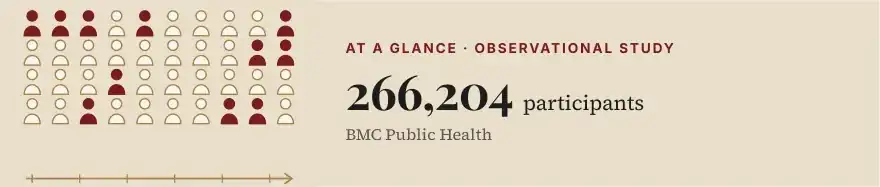
The evidence is observational. The researchers pooled data from five population-based aging cohorts. Of 266,204 participants who met the age criterion, 115,140 had usable paired data on physical activity and function, and 112,855 entered the main analysis. Observational work can show links. It cannot show that activity caused the differences.
The team sorted people into four groups by comparing two assessments, usually about two years apart. Some were stable inactive. Some became active. Some became inactive. Some stayed active. In the Mexican cohort, the median gap was three years. They also tracked function in three states. Independent meant no disability. The second state was disability in instrumental activities of daily living (IADL) only. These are more complex tasks of daily life. The third was disability in basic activities of daily living (BADL), which covers more fundamental self-care. Statistical models estimated how often people moved between these states, in either direction. Death was not modeled as an outcome.
Becoming active and staying active were generally linked to less decline and more recovery than staying inactive. Staying active had the most favorable overall profile, according to the authors.
Among people who started out inactive, those who became active had a lower rate of moving from Independent to IADL disability only (hazard ratio 0.58; 95% confidence interval 0.46–0.72). A hazard ratio below 1 means the transition happened less often. They also had a higher rate of recovering from BADL disability to Independent (hazard ratio 1.73; 95% CI 1.40–2.13).
Stopping activity showed the opposite pattern. Compared with people who stayed active, those who became inactive moved into IADL disability more often (hazard ratio 1.28; 95% CI 1.03–1.58). They recovered from BADL disability less often (hazard ratio 0.66; 95% CI 0.61–0.72).
The authors urge caution. Results varied widely between cohorts. The I² statistic, which measures inconsistency between studies, ranged from 26.1% to 98.5%. In 12 of 18 prediction intervals, the range of effects expected in a new setting included 1, meaning no effect. A sensitivity analysis using multiple imputation, a method for filling in missing data, pointed the same direction.
The abstract does not say why the patterns differ between cohorts. It does not report how much activity was needed or what type. Those details are unverified here, as only the abstract was available.
A separate study in GeroScience looked at 1,611 adults followed from age 80 to 90 in two US cohorts. It found that IADL disability strongly predicted later disability. It also found several small links between disability and physical activity, and between disability and depressive symptoms. The authors said this highlights the importance of maintaining functional independence in later life. That work is also observational and was only available as an abstract.
Together, the studies suggest that activity and independence track closely in older age. Neither can say whether starting to exercise at 50 or later produces the benefit. Trials that assign activity directly would be needed to test that. Anyone considering changes to their activity should first talk to their own clinician.
Sources: BMC Public Health (2026), BMC Public Health
Keep reading on this subject
Fitness & movement · Care & independence