A way of eating you can build a life around.
Nutrition & healthy aging
Nutrition & healthy aging / November 2, 2026
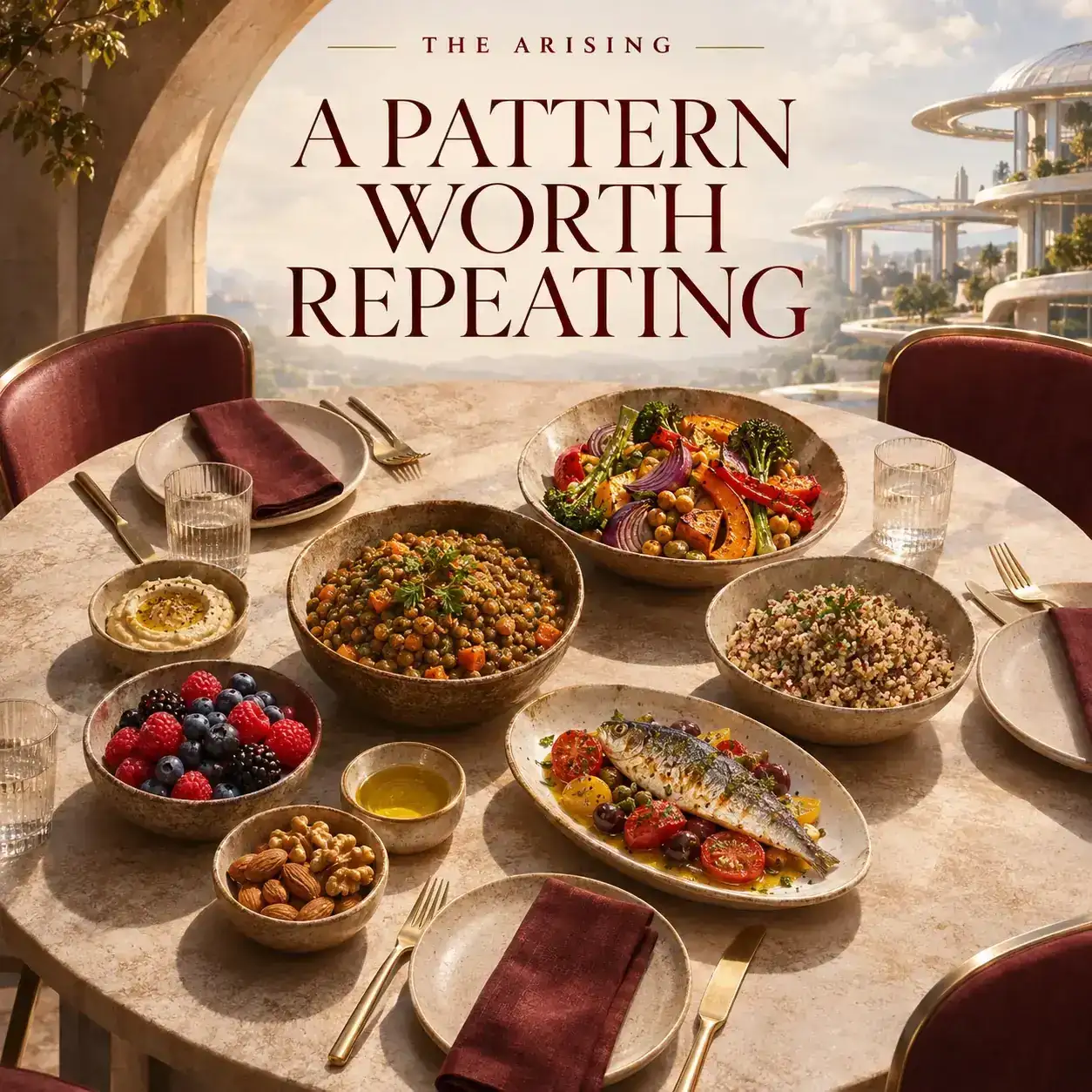
A way of eating has to survive an ordinary Tuesday.
Work runs late. Someone needs a ride. Dinner still has to happen.
That is why the pattern matters.
A 2025 Nature Medicine study followed 105,015 people for up to 30 years. Greater adherence to several healthy dietary patterns was associated with healthier aging—defined to include reaching 70 free of major chronic disease while maintaining cognitive, physical, and mental health.
The patterns shared familiar ground: fruits, vegetables, whole grains, nuts, legumes, and unsaturated fats.
This was observational research, largely in health professionals. It cannot prove that a diet caused the outcome, and self-reported information and other lifestyle differences complicate the picture.
My practical question is how to make a nourishing pattern possible: the food someone enjoys, can afford, knows how to prepare, and can return to.
Those details deserve a place in the design of longevity care.
For you, what makes eating well easier to repeat?
A closer reading
The researchers used repeated dietary questionnaires from the Nurses’ Health Study and Health Professionals Follow-Up Study. They examined eight patterns rather than treating one branded diet as the only candidate. Of the full sample, 9,771 people met the study’s composite definition of healthy aging.
People with the healthiest dietary scores also differed in other ways, including socioeconomic circumstances and physical activity. Statistical adjustment helps, but it cannot remove every unmeasured difference or fully exclude reverse causation. The participants were mostly health professionals of European ancestry, limiting how confidently the exact estimates transfer to other populations.
Healthy aging here was a research definition. A person who lives well with a treated chronic condition may not meet it, and that does not make their life a failed outcome. It is useful to study disease burden and function together while remembering that no composite score captures all of a person’s experience.
Our care-design inference is to make implementation visible. Food access, cooking skills, schedules, preferences and relationships shape what a plan asks of someone. Those suggestions are not findings from a randomized clinic program in this paper. They are questions worth testing when bringing long-term dietary evidence into everyday care.
Source and review scope
Primary study: PubMed 40128348 (2025)
Primary abstract plus retrieved PMC results, methods and limitations reviewed (body segments 0–36,000 characters; remainder not reviewed). Observational design, self-report, residual confounding and limited population diversity retained.
Prepared November 2, 2026. Study dates are shown explicitly. Claim record AR-DL-20261102-04. Educational writing, not individual medical advice.