THE ARISING · Science & Frontiers
Uranium Slowly Loses Its Easy Mode, and the Physics Says the Clock Is Real
Our research desk proposes that uranium decay could make unenriched reactors harder for a much later civilization to build. The isotope arithmetic is straightforward; the reactor-design and historical consequences remain hypotheses.
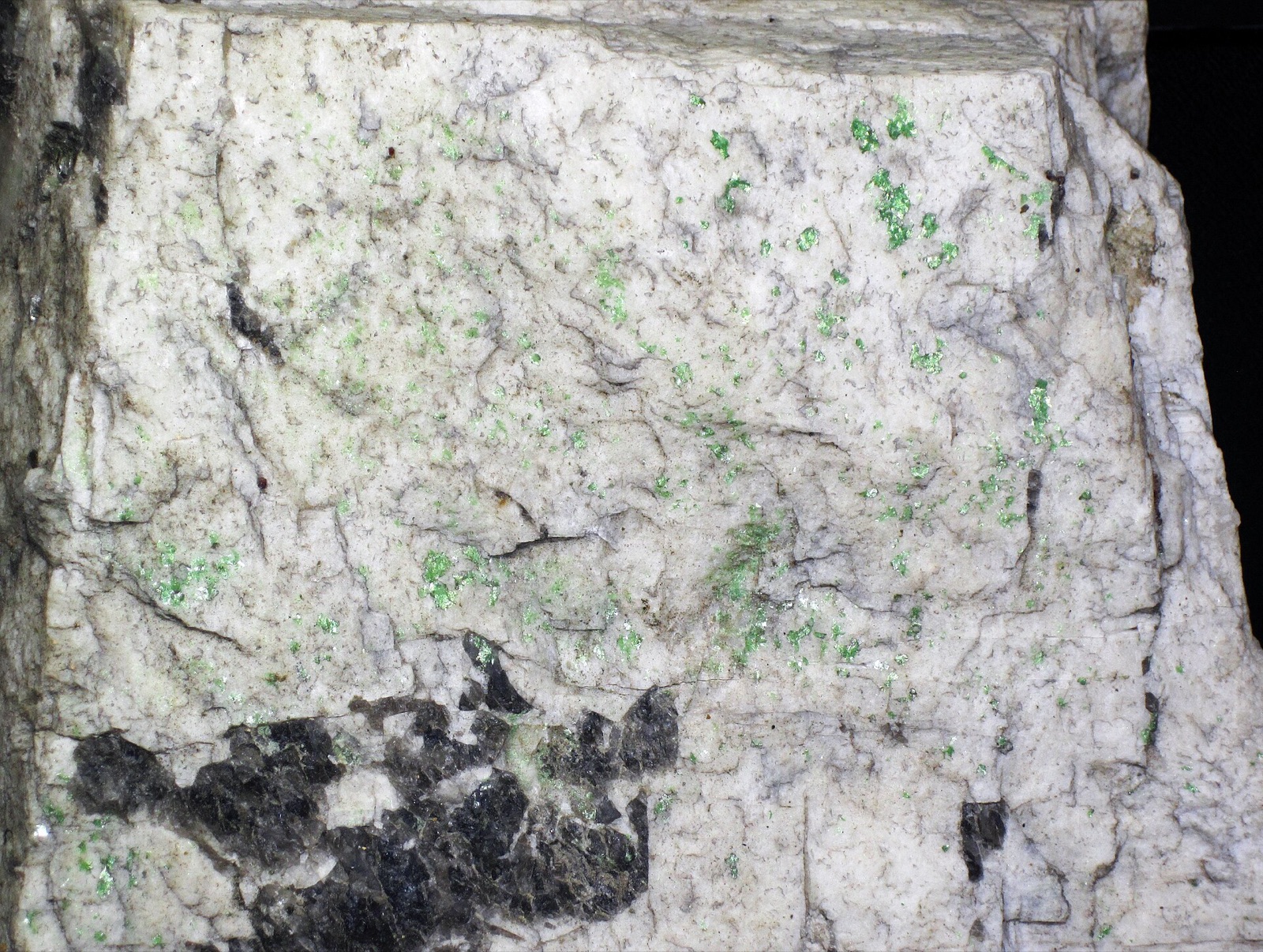
Earth’s primordial uranium predates the planet, and the most useful kind is quietly disappearing. About two billion years ago, uranium ore in present-day Gabon ran as a natural nuclear reactor with nothing but groundwater to help. Today the isotope mix is much less favorable for an Oklo-like reactor, and in another two billion years it may be impossible to build one on purpose without enrichment.
That is the core of a proposal from our research desk. It asks whether the age of a planet, not just its resources, decides which technologies a society can reach first.
Uranium comes in two main forms. Uranium-235 sustains a chain reaction readily and has a half-life of about 704 million years. Uranium-238 is far more stable, with a half-life near 4.47 billion years. So the share of the useful isotope falls steadily with time.
Natural uranium today holds about 0.72 percent uranium-235. That is just enough for heavy-water and graphite reactors to run on unenriched fuel. Ordinary light-water reactors need enrichment.
The desk's prediction: a careful reactor-physics comparison will show that uranium aged another two billion years, at roughly 0.14 percent uranium-235, cannot sustain a chain reaction in any of those thermal designs without enrichment or outside help. This is an untested reactor-design hypothesis, not a calibrated probability. The broader idea that losing this option could delay a civilization is also uncertain.
Using a two-isotope decay model, a present uranium-235 fraction of 0.72 percent and half-lives of 704 million and 4.47 billion years gives about 0.138 percent after two billion years and 3.67 percent two billion years ago. These are calculated isotope fractions, not reactor-criticality results.
Oklo itself is well documented. A 2018 study in PNAS by Groopman and colleagues at the US Naval Research Laboratory found Oklo uranium with a uranium-235/uranium-238 ratio of 0.3655 ± 0.0007 percent (2σ), the most depleted natural uranium known. That deficit is the fingerprint of fission that ran long ago.
Uranium is not only a power source. Much of modern nuclear medicine depends on reactors. Technetium-99m, used in millions of heart, bone and cancer scans, comes from molybdenum-99, traditionally made by fissioning uranium targets in research reactors.
A 2012 review by Pillai and Knapp described recurring shortages of that supply and alternative routes that avoid uranium fission. The lesson is practical: diagnostic medicine rests on a small number of physical facilities and isotopes, and supply resilience is a real health issue.
There is also a lesson about judging claims. Isotope decay can be calculated from measured half-lives. Whether a particular fuel and reactor configuration sustains criticality requires a defined model, and any effect on civilization requires a separate historical argument.
The isotope trend is established; the proposed reactor limit and civilizational consequences have not been demonstrated here. A society that discovers fission could also learn isotope separation, or turn to thorium, or never need nuclear power at all.
Enrichment is hard, but humans solved it within a few years of discovering fission. So a late-arriving society would lose an easier starting route, not the technology itself. The proposal cannot measure how much that delay would matter.
• A published, reproducible reactor-physics comparison of today's uranium against the aged mixture. • New Oklo isotope work refining how long and how hot the natural reactors ran. • Progress on non-fission routes to molybdenum-99 that make medical imaging less dependent on uranium reactors.