What happens after the appointment?
Community & brain health
Community & brain health / November 2, 2026
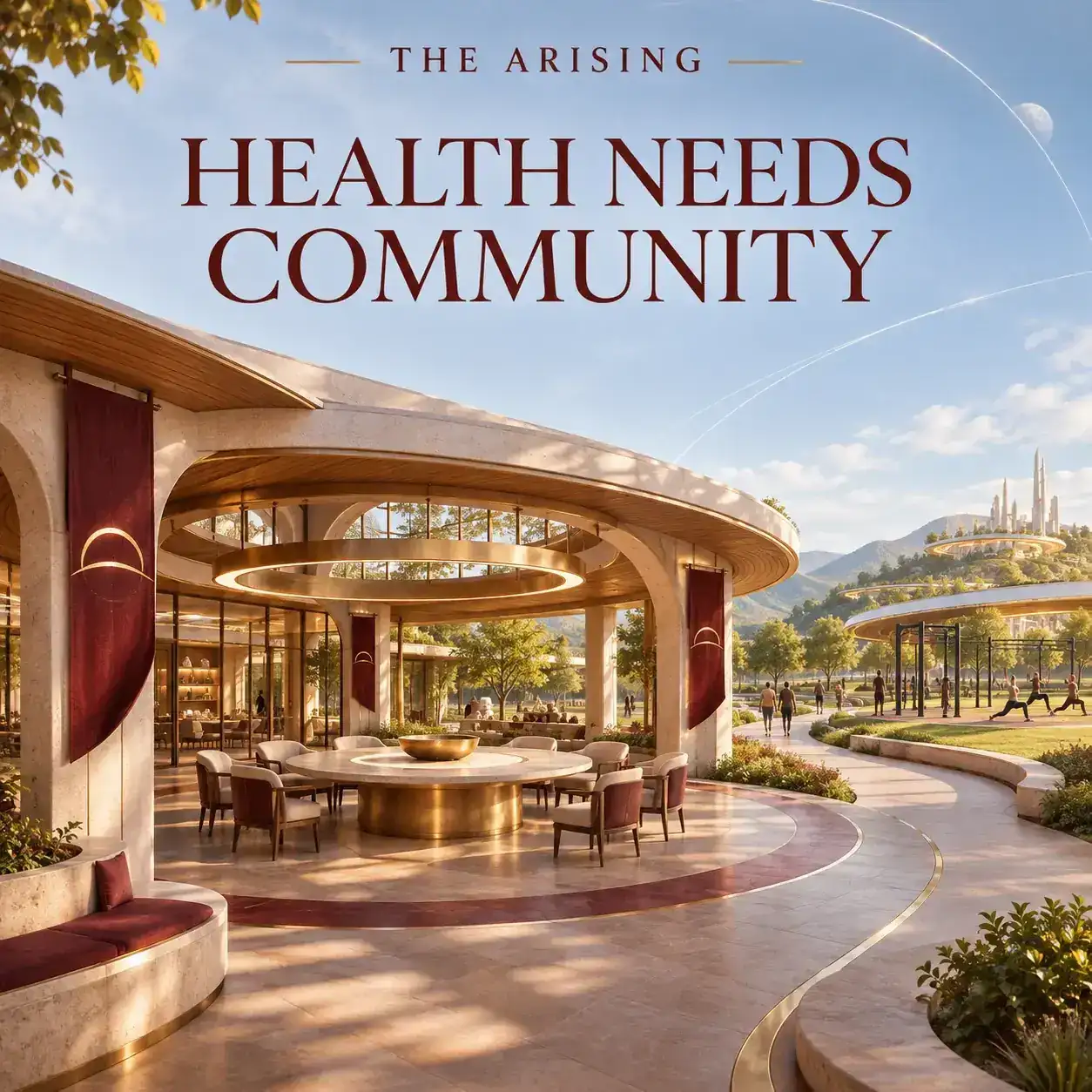
The appointment ends. The rest of the week begins.
That is where a great deal of longevity care has to work: meals, movement, people, and the routines we can actually sustain.
The 2025 US POINTER trial offers a useful clue. It randomized 2,111 adults aged 60–79 at increased risk of cognitive decline to two lifestyle programs. Both encouraged exercise, healthy eating, cognitive activity, social engagement, and cardiovascular monitoring.
The more structured program produced a small additional improvement in cognitive test performance over two years.
It did not establish dementia prevention, and it cannot tell us which ingredient made the difference. Community alone was not the treatment being tested.
But it gives us a serious design question: what would healthcare look like if support between visits received the same attention as the visit itself?
A place to move. Help making food changes practical. People who expect to see you again.
At Arising Health, that is a future worth building.
What makes a health routine easier to keep in your own community?
A closer reading
The study compared two active approaches. The self-guided group also received a lifestyle intervention, so this was not a comparison of comprehensive care with no care. The structured program differed in intensity, organization and accountability. Reading its result as proof for any one activity would miss what the investigators actually tested.
The annual between-group difference in the global cognitive composite was 0.029 standard deviations (95% confidence interval 0.008 to 0.050). Both groups improved on testing. Statistical evidence for a difference does not by itself establish how much a person would notice in daily life. The researchers identify function, durability and longer follow-up as important remaining questions.
For a community clinic, the implication is an invitation to test delivery. Can people attend? Are activities affordable and accessible? Does the program help them return after an illness, a demanding workweek or a difficult month? A beautifully designed room cannot answer those questions. Attendance, experience and meaningful outcomes can.
This article proposes a way to think about care design. The trial did not evaluate a commercial longevity clinic, establish that social connection alone caused its result, or prove that any particular clinic model extends life. The useful connection is the shared problem of turning advice into sustained participation.
Source and review scope
Primary study: PubMed 40720610 (2025)
Primary PubMed abstract reviewed. Full-text retrieval was unavailable through the connector; detailed intervention, harms and funding disclosures were not independently audited. Outcome and uncertainty are retained. This is a 2025 study revisited in November 2026.
Prepared November 2, 2026. Study dates are shown explicitly. Claim record AR-DL-20261102-01. Educational writing, not individual medical advice.